
The goal of pediatric dentistry is to help protect your child’s smile every step of the way, from infancy until your child’s late teen years. A great way to get off to a strong start is with an infant oral health exam performed by one of our Grandville, MI, pediatric dentists. We know can be stressful which is why we take the time to answer all of your questions related to teething, primary teeth, and more.
Learn more about why an oral health exam for infants and dental checkups for young children are worth prioritizing below.
What Happens During an Infant Oral Health Exam?
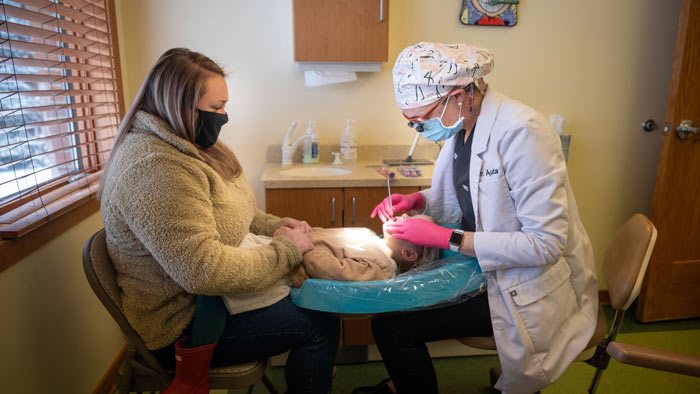
For a baby dental exam, our board-certified pediatric dentists will examine your child’s gums, teeth (those that have erupted), and jaw development. We’ll look for early signs of tooth decay, check the spacing of incoming teeth, and assess bite alignment. The visit also includes valuable education for parents about nutrition, home care, and what to expect as more teeth start to poke through the gums.
A few topics covered during an infant dental exam include:
- Signs of teething and how to manage discomfort
- How to clean your baby’s mouth before and after teeth erupt
- Tips for bottle and breastfeeding that support oral health
- Toddler tooth brushing tips to use in the future and how to transition to fluoride toothpaste
When Does Teething Occur?
Normally, your will erupt when they are between 6 to 12 months old.
Gums are sore, tender, and sometimes irritable until the age of three. Rubbing sore gums gently with a clean finger, the back of a cold spoon, or a cold, wet cloth helps soothe the gums. Teething rings work well, but avoid teething biscuits as they contain sugar that is not good for baby teeth.
Infant Tooth Eruption
A child’s teeth actually start forming before birth. As early as 4 months old, the primary or “baby” teeth push through the gums. The lower central incisors are first, then the upper central incisors. The remainder of the 20 primary teeth typically erupt by age 3, but the place and order vary.
Permanent teeth begin eruption around age 6, starting with the first molars and lower central incisors. This process continues until around age 21. Adults have 28 secondary (permanent) teeth, or 32 if you include the third molars (wisdom teeth).
New Baby Teeth & Why They’re Important
The primary, or “baby,” teeth play a crucial role in dental development. Without them, a child cannot chew food properly and has difficulty speaking clearly. Primary teeth are vital to the development of the jaws and for guiding the permanent (secondary) teeth into place when they replace the primary teeth around age six.
Since primary teeth guide the permanent teeth into place, infants with missing primary teeth or infants who prematurely lose primary teeth may require a space maintainer, a device used to hold the natural space open. Without a maintainer, the teeth can tilt toward the empty space and cause permanent teeth to come in crooked. Missing teeth should always be mentioned to your family dentist.
The way your child cares for their primary teeth plays a critical role in how they treat their permanent teeth. Children and adults are equally susceptible to plaque and gum problems, hence the need for regular care and dental checkups.
When Should My Child’s First Dental Visit Be?
Your child’s first dental visit should be scheduled either within 6 months of their first tooth or around their first birthday. Many parents wait until all baby teeth are in, or until there’s a visible problem like discoloration or sensitivity. But by then, decay or alignment issues may already be in progress. Getting ahead of these problems is the core of preventive dental care, and it ideally starts with an infant oral exam.
The most important part of this type of visit is getting to know our dentists and becoming comfortable with them and our staff. A pleasant, comfortable appointment builds trust and helps put your child at ease during future dental visits. If possible, we often allow your child to sit in your lap in the exam room.
Prepare your child for a dental visit by:
- Reading age-appropriate books about going to the dentist
- Letting your child “practice” opening their mouth at home
- Having your child “brush” a stuffed animal’s teeth
- Keeping your language positive; avoid saying “it won’t hurt”
- Staying calm and upbeat, even if your child gets nervous
How Do I Prevent Baby Bottle Tooth Decay?
While your baby is teething, it is important to monitor their smile for . This occurs when babies rely on breastfeeding or bottle feeding in order to fall asleep.
A bottle containing anything other than water that is left in an infant’s mouth while sleeping can cause decay. This happens because sugar in the liquid mixes with bacteria in dental plaque, forming acids that attack the tooth enamel.
Each time a child drinks liquids containing sugar (including breast milk or formula), acids attack the teeth for about 20 minutes. When your baby is awake, their saliva carries away the liquid. During sleep, the saliva flow significantly decreases, and liquids pool around the child’s teeth for long periods, covering the teeth in acids.
Read More → The Dangers of Baby Bottle Tooth Decay
To stay on top of cavity prevention, be sure to examine your baby’s teeth, especially on the inside or the tongue side, every two weeks. Telltale indicators of decay on teeth include dull spots or lines. Please let our Grandville, MI, pediatric dental office know if you notice any signs of decay or anything unusual in your child’s mouth.
Schedule Your Child’s First Visit
Our pediatric dentists in Grandville, MI, can help your child get a strong start on their oral health journey. To request an appointment, call Grandville Pediatric Dentistry at (616) 531-3430, or contact us online.